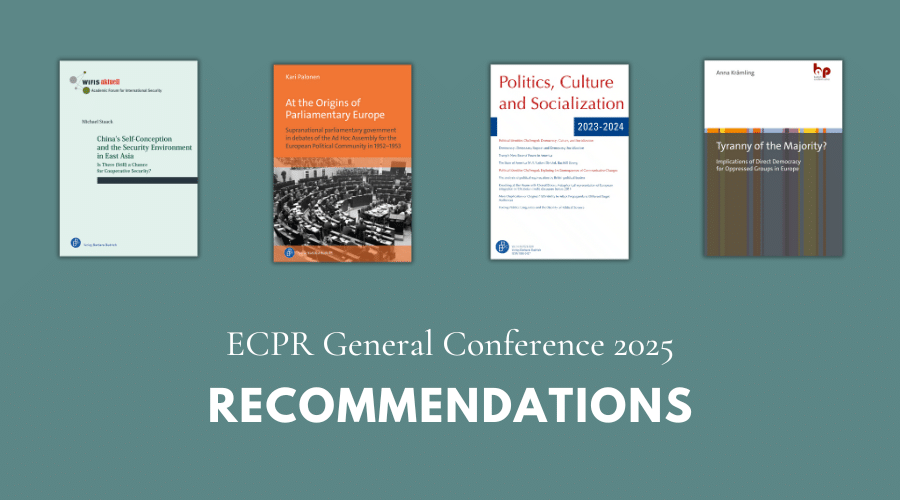
Our English-language title recommendations for the annual conference European Consortium for Political Research (ECPR) 2025.
From 26 – 28 August, political researchers from Europe and around the world will meet at the Aristotle University of Thessaloniki for the annual conference European Consortium for Political Research (ECPR).
 NEW
NEW
Logistical Chokepoints, Precarious Work and Social Reproduction
Labour Conflicts and the Metabolic Rift in Ports and Airports in Brazil and Portugal
2025
by Anne Engelhardt

China’s Self-Conception and the Security Environment in East Asia
Is There (Still) a Chance for Cooperative Security?
2024
by Michael Staack
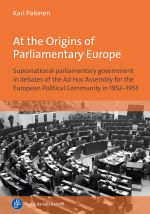 At the Origins of Parliamentary Europe
Supranational parliamentary government in debates of the Ad Hoc Assembly for the European Political Community in 1952–1953
2024
by Kari Palonen
“Kari Palonen’s work makes an important and innovative contribution to the conceptual historiography of European politics and governance. In doing so, Palonen helps us to better understand the democratic and parliamentary foundations that were, in part, envisaged for the institutionalised European unification in the 1950s and that were later partially realised in subsequent decades.”
Mechthild Roos, pw – Portal für Politikwissenschaft
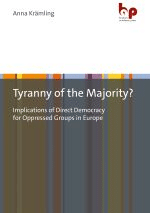
Tyranny of the Majority?
Implications of Direct Democracy for Oppressed Groups in Europe
2024
by Anna Krämling
PCS – Politics, Culture and Socialization
PCS 2023-2024 | Special Issues

Blurring Boundaries – ‘Anti-Gender’ Ideology Meets Feminist and LGBTIQ+ Discourses
2023
edited by Dorothee Beck, Adriano José Habed and Annette Henninger
“The collection’s strength lies above all in the diverse array of methodologies used. Each essay is meticulously researched, exhibiting a forensic attention to detail and a robust commitment to self-reflexivity.”
Ry Montgomery, LSE Review of Books
 The Making of the World.
How International Organizations Shape Our Future
2023
by Yves Schemeil
“Sociologists Gayl Ness and Steven Brechin once harshly criticized the political science literature on international organizations (IOs) for not understanding IOs as organizations, thus missing the dynamics that take place within and through them. They found little response, but political scientist Yves Schemeil did precisely what the two recommended to bridge the gap. Schemeil’s new approach makes this book completely different from regular IO studies. His book, based on thorough research, is rich in examples from a wide variety of IOs and contains for readers interesting dialogues, debates and excitedly delivered explanations.”
Bob Reinalda, Radboud University, The Netherlands

Don’t miss our conference discount! From 15 August to 15 September you can get a 75% discount on all our English-language e-books in our webshop with the code ECPR_2025. Click here to go to the webshop: shop.budrich.de/en